The salary tool that actually keeps secrets
Google Forms feel anonymous.
It's not when your group is small, or when people know each other.
We built math that actually keeps compensation secret,
even if participants know each other, so you can run the most focused benchmarks and negotiate like a boss
You control the sample. We make it safe.
Start your poll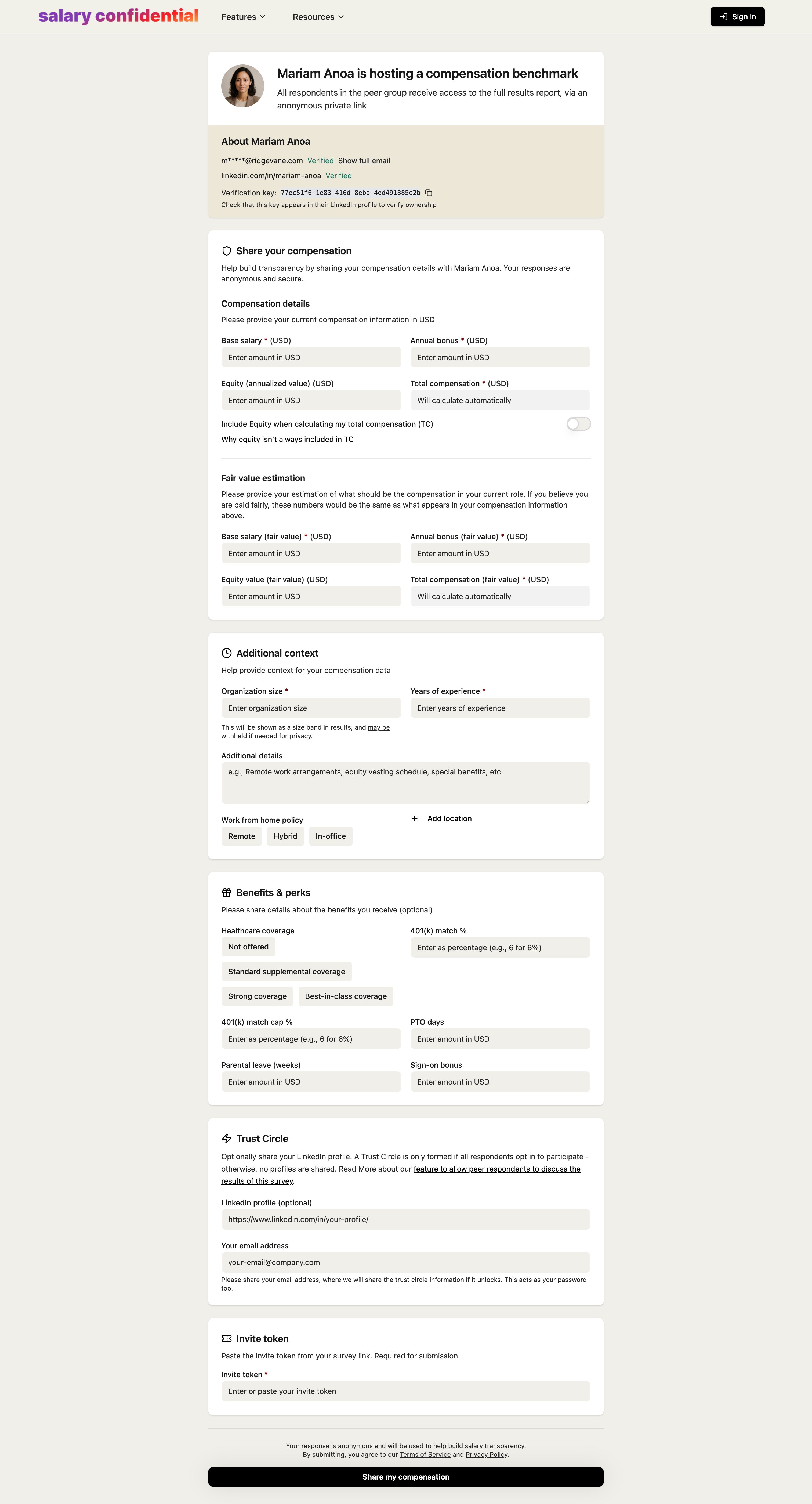
Compensation data that anchors your negotiation
With a traditional salary benchmark, the source of variance is unclear — so you can't anchor to your spot in the spread. With Salary Confidential, the source is known and controlled. The variance is just an outcome, but you can anchor to any part of the spread because you made sure all data points were relevant in the first place.
Generic benchmark (e.g., Levels.fyi)
| Level | P35 | P65 | VarianceP35–P65 range |
|---|---|---|---|
| L1 | $160,000 | $190,000 | $30,000 |
| L2 | $225,575 | $285,000 | $59,425 |
| L3 | $286,000 | $393,975 | $107,975 |
| L4 | $380,000 | $550,000 | $170,000 |
| L5 | $476,500 | $764,253 | $287,753 |
| L6 | $808,500 | $2,054,460 | $1,245,960 |
| All | $200,343 | $300,000 | $99,657 |
Why most compensation data doesn't help
Crowd-sourced platforms (Glassdoor, Levels)
You trade control for scale. The dataset is large, but contributors are unknown and context is inconsistent. Useful for rough ranges — not precise leverage.
Anonymous forms & shared sheets
You can control who contributes, but anonymity breaks down in small groups. Even if submissions are anonymous, responses can still be inferred from timing or context.
The real constraint
The most relevant compensation data comes from very controlled peer groups — but when you know who's in the group, it becomes easier to guess who shared the data.
Most platforms avoid this problem by relying on large anonymous datasets. And when generic survey tools promise anonymity, they only hide who submitted the form — not whose data it likely is.
Salary Confidential — curated peer group









Salary Confidential
You identify the specific people
whose comp matters to your negotiation — in your network or beyond.
They participate because they co-own the results.
Everyone who shares gets the same report. If the data is tightly relevant to you, it's tightly relevant to them too.
Privacy protections work even at 4 responses.
You can ask anyone — even in very small groups — because we protect everyone's anonymity.
Privacy by construction
Requesters are verified, respondents are anonymous
This is a professional tool built on trust. Requesters verify their identity via LinkedIn and professional email. Respondents stay completely anonymous — no account required.
Cryptographic invitation tokens
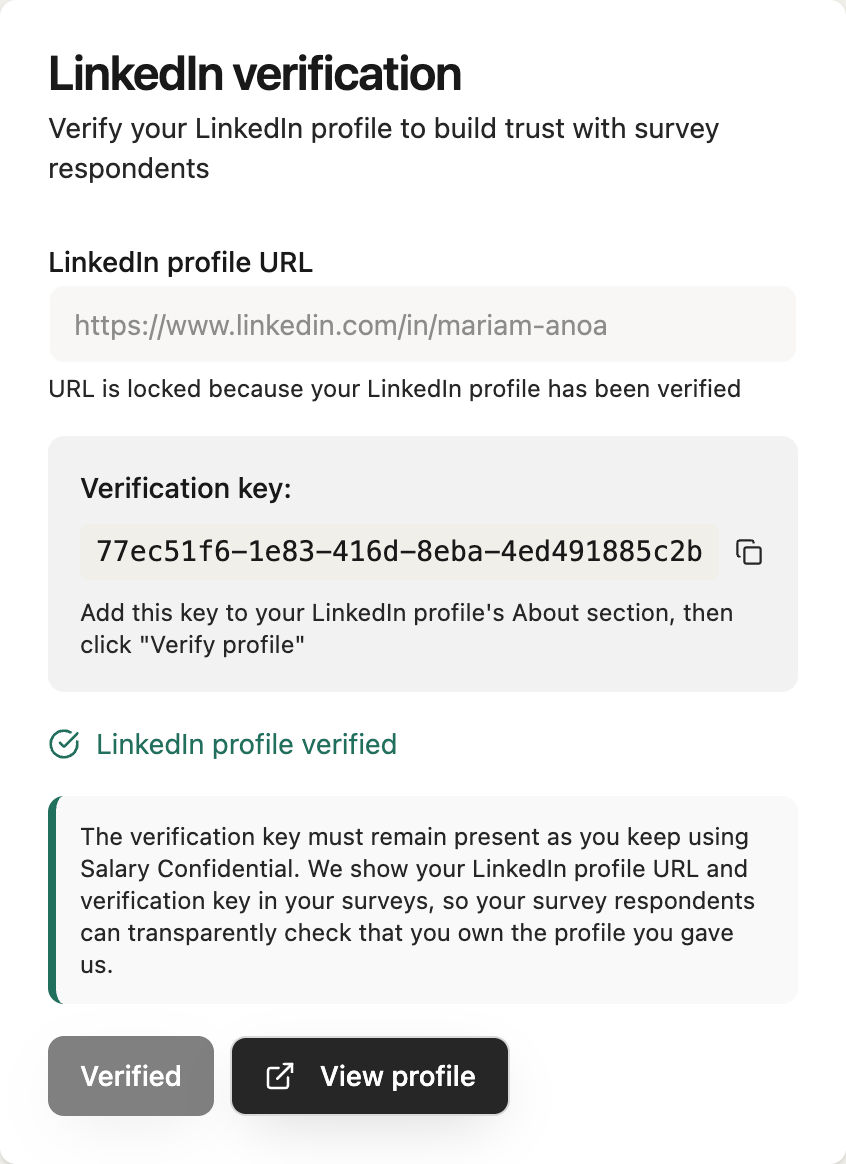
Token redemption is never linked to responses. The system is designed to be “blind” — even we don't know who responded.
Batched release
Results release in groups of 3+, with no timestamps. This prevents timing-based inference about who submitted what.
Information design prevents triangulation
Optional fields like location are displayed separately and in randomized order — never joined to specific compensation records.

Why would anyone share their salary with you?
Tightly focused peer groups
Salary Confidential supports tightly focused peer groups — if the data is relevant to you, it's relevant to every peer you invite.
Requesters “buy the room,” respondents share the value
Requesters control who participates and fund the survey. But respondents get the same full report in return — everyone wins.
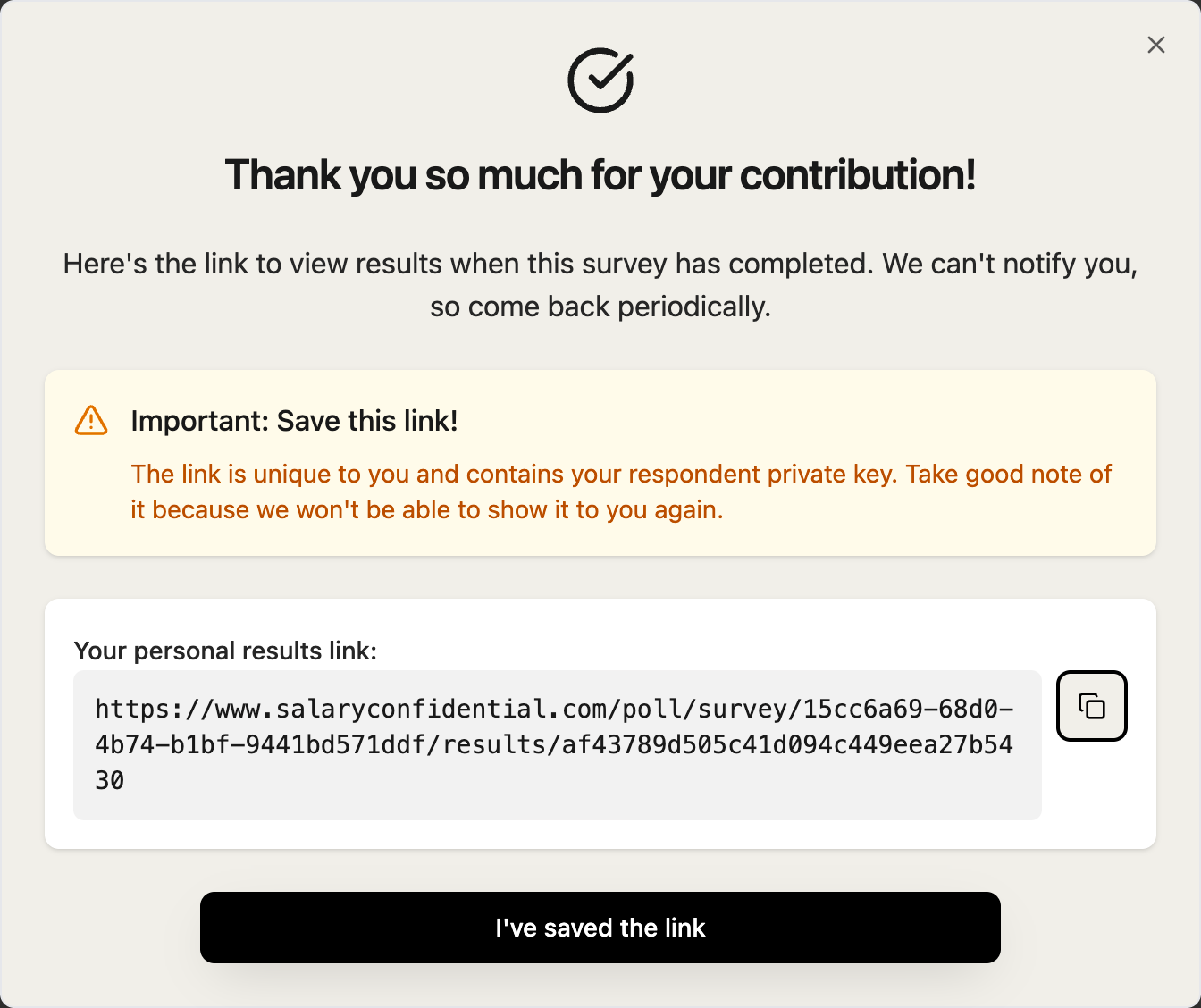
Privacy-protecting outreach
Our outreach interview helps you introduce the peer group in precise, yet privacy-protecting terms. Peers understand exactly who else is in the survey — without knowing who specifically.
Safe and fair
It's safe for them. The data levels the playing field for everyone.
Build your survey
Define your peer group. Set up your compensation questions. Purchase response slots (minimum 4). The survey builder walks you through every field — base pay, bonus, equity, and the contextual details that make data meaningful.
Optionally, you can enable question packs that focus on equity compensation, performance pay (for sales, execs), and benefits prevalent in your geography (eg, US, UK, EU, Canada). These extensions generate additional charts and comparisons, including our Equity indices that allow you to compare packages between organizations of different maturity
Invite your peers
Send private invite links to people in your network or beyond. Each link is single-use and cryptographically anonymous — no account, no email, no trace.
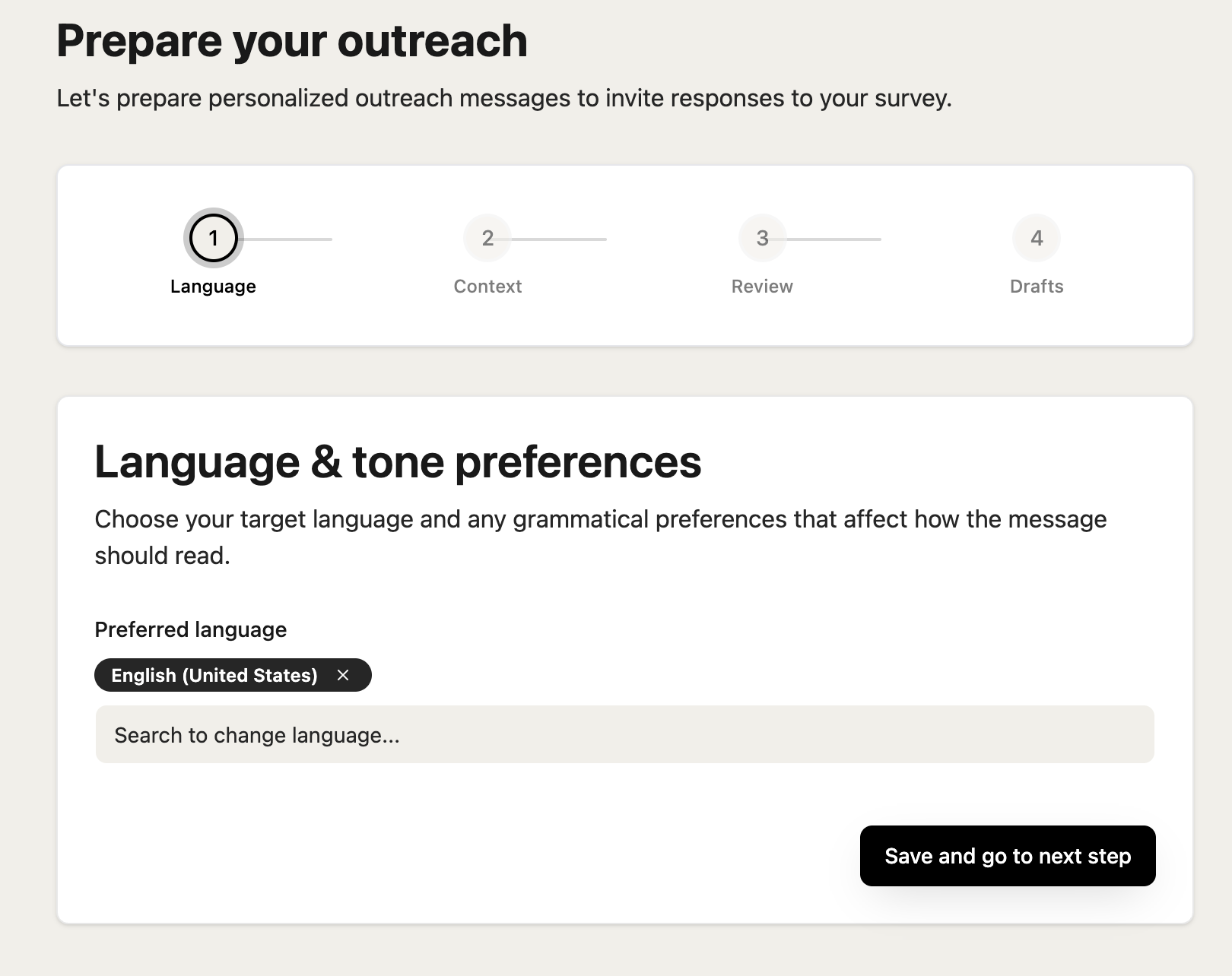
Our outreach interview helps you craft the right message for your DMs: one that introduces the peer group precisely, without revealing anything about other participants.
Results release as responses come in
At 3 responses, you start seeing partial results — anonymized, aggregated, and released in batches to prevent timing-based inference about who submitted what.
When the survey closes, respondents get access to the same full report. Everyone who shared gets to see the complete dataset — that's the deal.
Learn about our results release processPartial results - preview
You can see anonymized compensation insights while we protect individual responses until the survey closes.
Results appear only in groups of at least three. (Read our FAQ about our batched results release).
If your survey isn't a multiple of three, the final update will include all remaining responses together.
This keeps your peers' data anonymous — always.
Preview metrics (first three responses only)
Mean total compensation
$216,667
Median total compensation
$180,000
Mean Base Salary
$178,333
Median Base Salary
$145,000
Preview metrics stay fixed until the final report so that additional responses remain impossible to triangulate.
Released batches: 0 of 1
Next update unlocks at 6 responses (2 more needed).
Compare and isolate variance in their own groups
Run differentiated surveys by company stage, location, educational background — or investigate whether demographic factors like gender or ethnicity correlate with pay differences among your peers.
Most career decisions aren't binary. You might be evaluating the same role at Series B startups versus Series C+ companies — or comparing adjacent roles to understand different career paths.
With Salary Confidential, each peer group gets its own focused survey with its own detailed report. But they all roll up to a single poll-level view that shows you how different groups compare.
You don't sacrifice granular understanding just because you want the big picture. You get both.

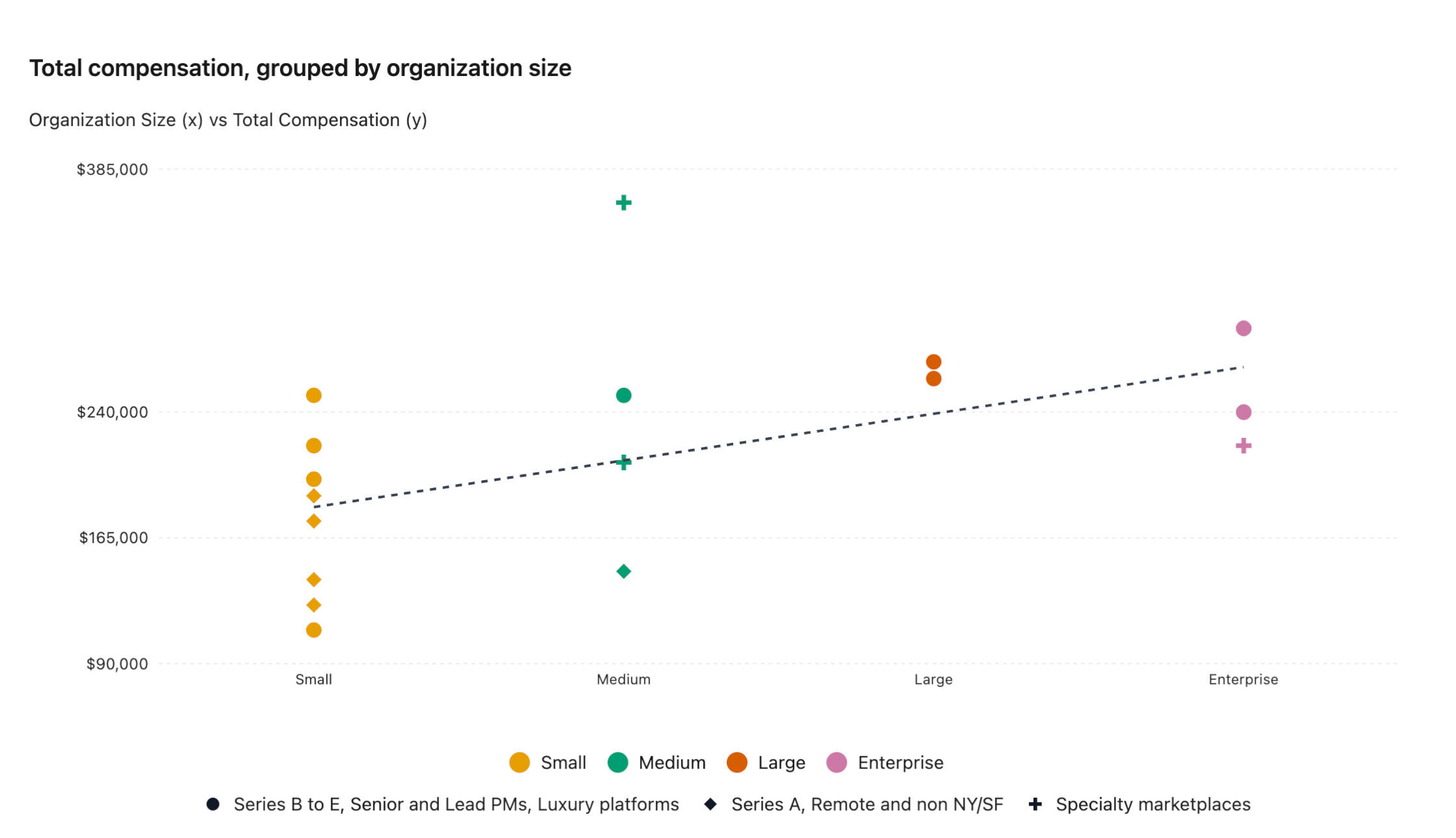
Base compensation by peer group
Compare median and quartile ranges across your surveys to understand how compensation varies by company stage, role type, or other factors.
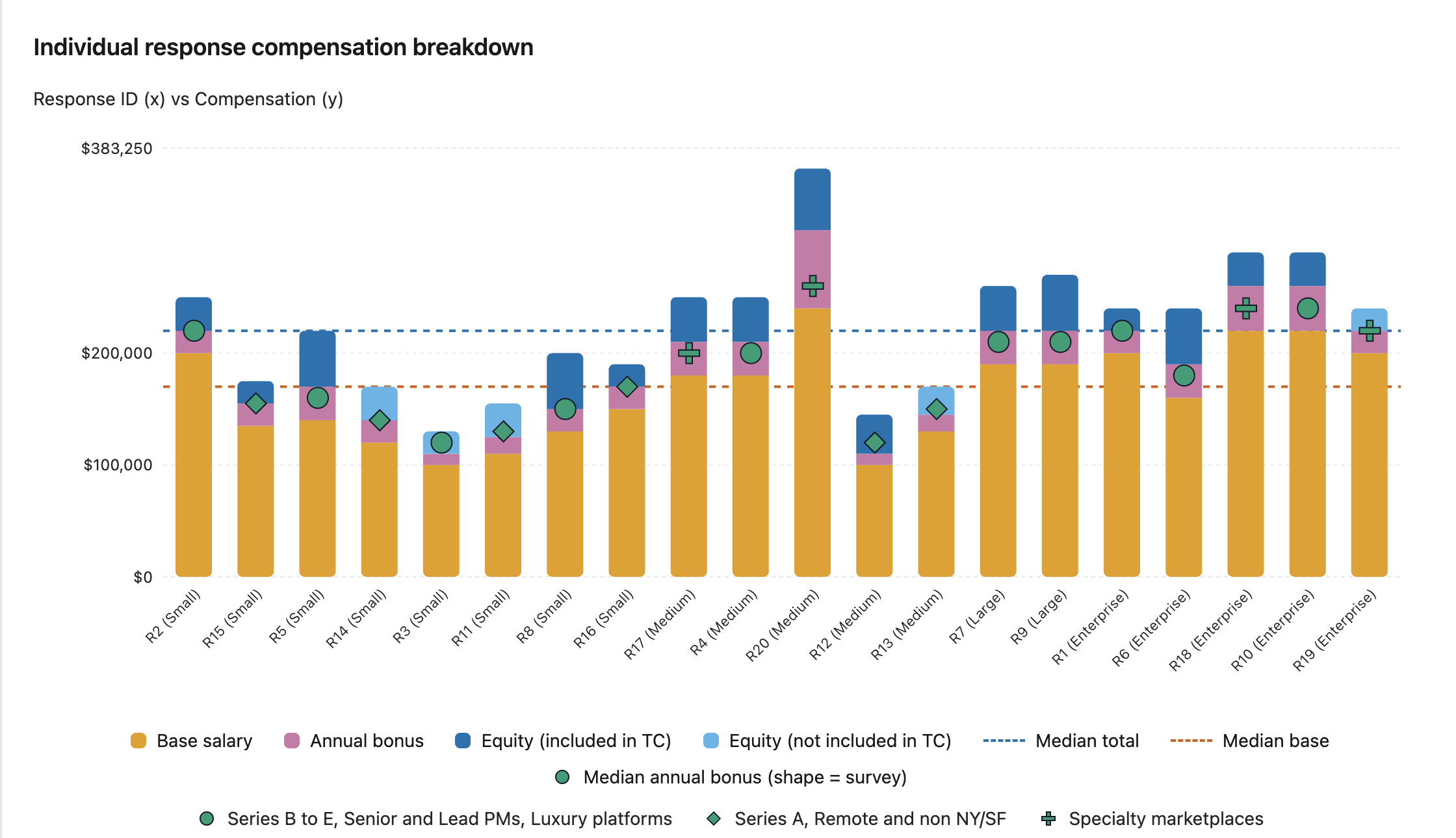
Total compensation breakdown
See how base, bonus, and equity stack up across different peer groups to understand the full compensation picture.
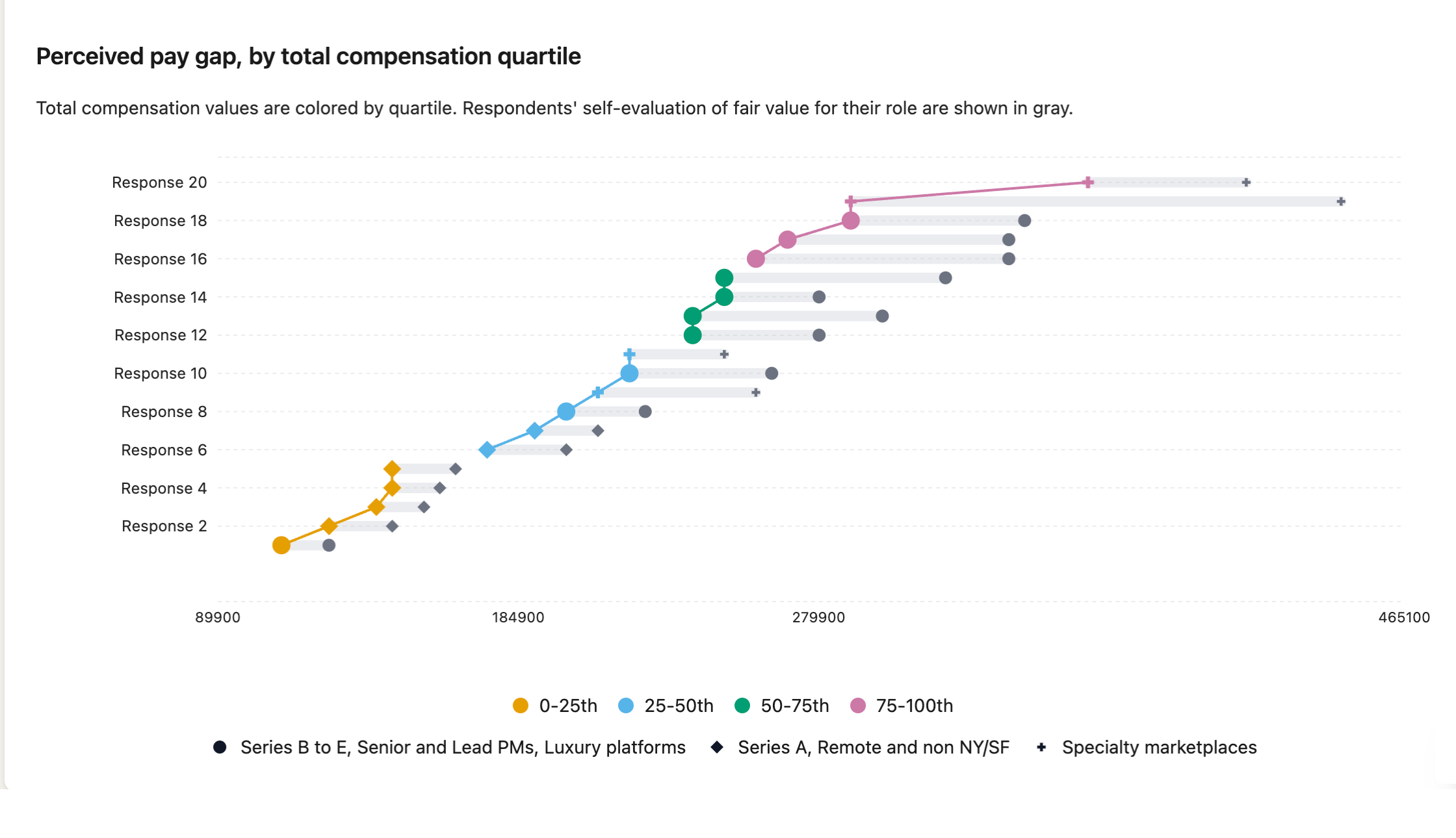
Fair value vs actual pay
Understand how respondents perceive fair compensation versus what they're actually paid, broken down by peer group.
Pay per response slot. Start at 4.
Simple, transparent pricing
Introductory pricing: $19 per response slot
Minimum 4 slots — the privacy floor for anonymity
Add more slots to active surveys anytime
Invite as many people as you need — included. You only pay for the number of responses you want to collect.
One-time payment per survey, no subscriptions
Frequently asked questions
Does Salary Confidential work for any country?
Yes. Our survey models exist in multiple regional formats to reflect different compensation structures, and you can choose any currency you want.
The outreach interview can generate invitation messages in any language supported by OpenAI — even if our form conducts the interview in English. Your inputs will be collected in the target language of your message, our AI makes no changes to it so we're sure there is no drift.
Learn more about internationalizationWhat if my intended respondents don't participate?
You can invite as many people as you need — there is no cap on invitations. The survey automatically closes once the target number of responses is reached, regardless of how many people were invited, so there is no downside to inviting more people than your intended number of response slots.
If you have already reached 4 results (our minimum anonymity floor), you can close a survey peer group early to generate the report. Because this has potential privacy implications, we do this in a specific way to protect respondents.
Learn more about how you can close a survey earlyI'm concerned about bots or data scraping
Salary Confidential includes multiple protections designed to limit scraping and automated access. Your data can't be found by search or bots; and once the survey publishes its results report, it contains no identification data about the requester who kicked it off, making the report safe to share. These safeguards protect both survey participation and the data contained in reports.
Can I see a full report before creating a survey?
Yes. You can explore a complete poll report to see how results are structured. If you're technically inclined, you can even inspect the API calls in your browser console to see how data is delivered while protecting individual responses.
Know the numbers. Negotiate with confidence.
Salary transparency shouldn't mean choosing between precision and privacy. Whether you're exploring a new role or preparing for a raise conversation, you deserve data that actually reflects your situation — not crowd-sourced guesses.
Create your poll